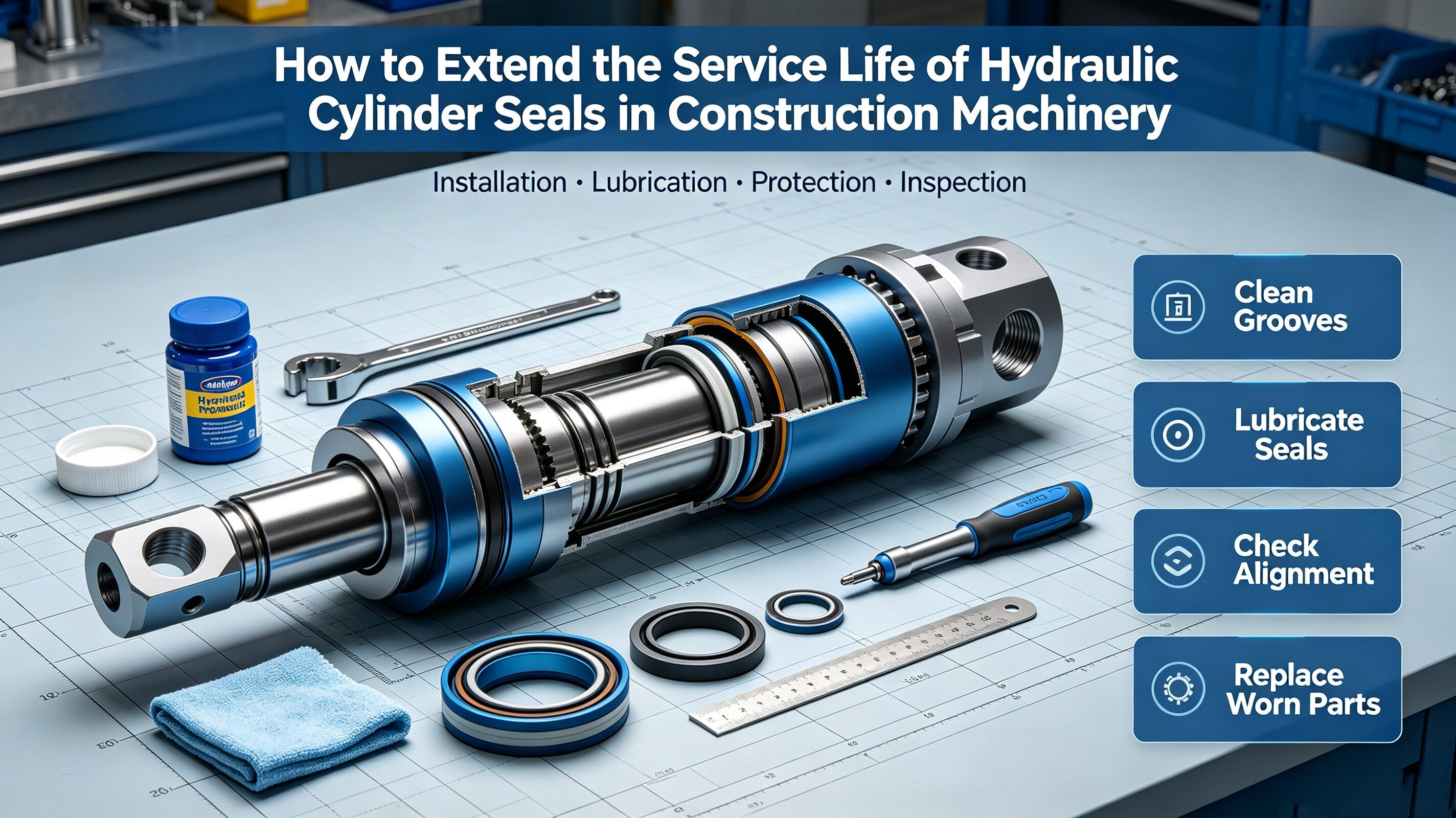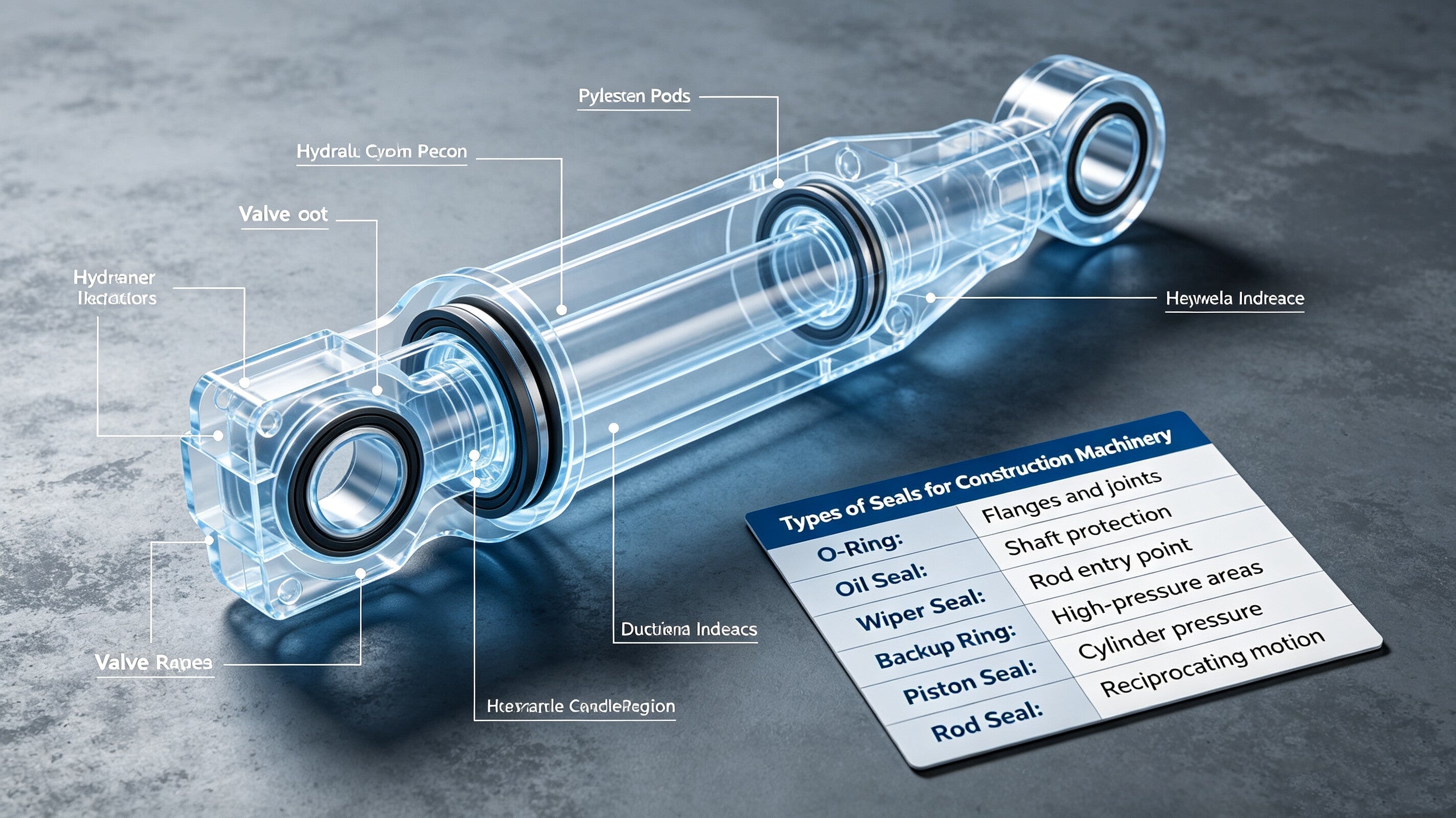

Short answer: External leakage is hydraulic fluid escaping from the cylinder or connection, commonly around the rod, gland, ports or end-cap seals. Internal leakage stays inside the cylinder and bypasses a piston seal or valve, often causing drift, weak movement or loss of holding force without visible oil.
External and Internal Leakage Compared
| Type | Typical symptom | Possible source |
|---|---|---|
| External | Oil visible around rod or cylinder | Rod seal, static O-ring, hose, fitting, port or damaged hardware |
| Internal | Drift or reduced force without visible oil | Piston-seal bypass, cylinder damage or control-valve leakage |
| Apparent leak | Residual film or oil from another component | Grease, previous spill, hose above the cylinder or normal carried film |
Step-by-Step Leakage Diagnosis
1. Make the machine safe
Lower attachments, isolate energy and follow the equipment manufacturer's test procedure. High-pressure hydraulic fluid can penetrate skin; never search for a leak with bare hands.
2. Clean the area
Remove old oil and dirt so the starting point can be observed. Oil can travel along a hose, casting or rod and appear far from its source.
3. Identify when the symptom occurs
Record whether leakage appears while extending, retracting, holding a load, parked or only when hot. Operating condition is important diagnostic evidence.
4. Inspect external sources
Check hoses, fittings, ports, welds, gland area, rod surface and static seals. A scratched rod can damage a replacement rod seal immediately.
5. Evaluate cylinder drift
Drift can be caused by piston-seal bypass, but control valves, load-holding valves and circuit leakage can produce similar symptoms. Isolate and test components using the manufacturer's procedure before assuming the cylinder is responsible.
6. Check contamination, heat and pressure history
Dirty oil, blocked filters, excessive temperature and pressure spikes can create or accelerate leakage. Correct the system condition before installing new seals.
7. Inspect after disassembly
Document the orientation and condition of every seal. Look for cuts, extrusion, hardening, scoring, uneven guide-ring wear and groove damage. These patterns help identify the root cause.
Symptom-to-Check Guide
| Symptom | First checks |
|---|---|
| Oil around the rod | Rod seal, wiper, rod scratches, gland alignment and contamination |
| Cylinder lowers under load | Piston bypass, valve leakage and load-holding circuit |
| Leak returns after resealing | Kit identity, seal orientation, installation damage, clearances and pressure |
| Seal edge extruded | Excessive clearance, pressure spike, backup ring and temperature |
| One-sided wear | Side load, bent rod, worn bearing, pins or bushings |
Frequently Asked Questions
Does cylinder drift always mean the piston seal is bad?
No. Internal leakage elsewhere in the hydraulic circuit can cause similar movement. Use the specified isolation and pressure tests.
Is a small film of oil on the rod normal?
A hydraulic rod needs a very thin lubricating film, but recurring droplets or oil accumulation requires investigation. Conditions and seal design differ.
Will a new seal kit repair a damaged rod?
No. Hardware defects and excessive clearances must be corrected; otherwise the new seals can be damaged.
Read common seal failure causes, browse excavator seal kits, or contact Fujis Seal.
Safety note: Hydraulic diagnosis should be performed by trained personnel using the machine manufacturer's procedures and appropriate test equipment.