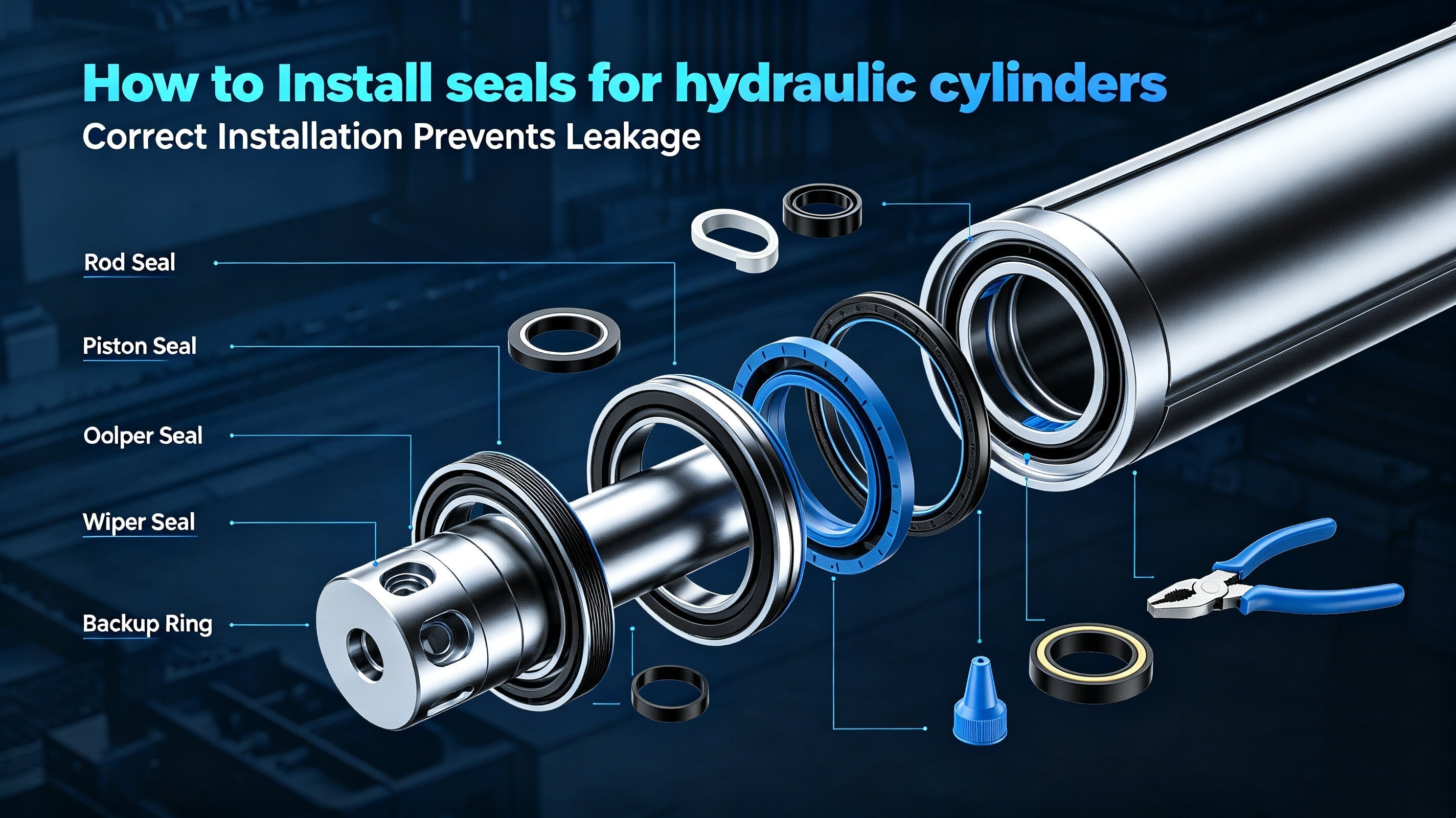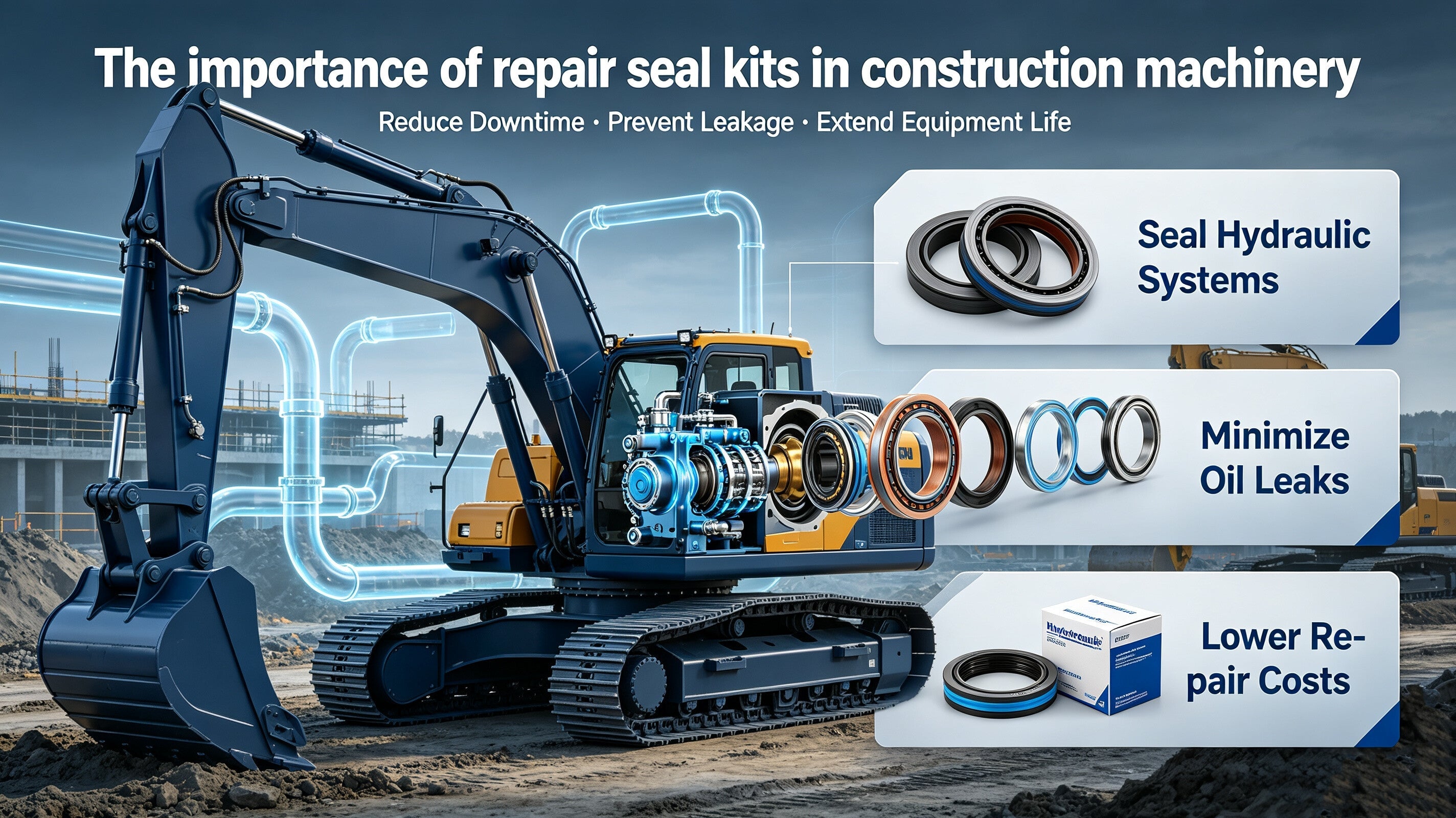

Short answer: Store hydraulic seal kits clean, dry, dark, relaxed and sealed in suitable packaging. A practical storage target is approximately 15°C, never above 25°C for routine storage, with relative humidity below 65%. Keep seals away from sunlight, ozone-producing equipment, solvents, heat and mechanical deformation.
Storage conditions can change elastomer and plastic properties before a seal is installed. Heat, oxygen, ozone, ultraviolet light, chemicals and sustained stress may cause hardening, softening, cracking, tackiness, swelling or permanent deformation.
Recommended Seal-Kit Storage Conditions
| Factor | Recommended practice | Risk if uncontrolled |
|---|---|---|
| Temperature | Cool and stable; approximately 15°C and normally no higher than 25°C | Accelerated ageing, hardening or material change |
| Humidity | Keep relative humidity below 65% | Moisture damage and corrosion of metal components |
| Light | Dark storage; avoid sunlight and high-UV lighting | Surface degradation and cracking |
| Ozone | Keep away from motors, high-voltage equipment and sparking devices | Cracking of ozone-sensitive elastomers |
| Packaging | Keep sealed in clean, suitable packaging, preferably original packaging | Dust, chemical contact and identification loss |
| Shape | Store without tension, compression, folding or hanging | Permanent set and distortion |
Packaging and Handling
Keep each kit in its original labeled package until required. The label should retain the part number, application, quantity and receipt date. Do not combine similar-looking rings from different kits. If repackaging is necessary, use clean, seal-compatible bags and keep the original identification with the components.
Lay large rings flat or support them in their natural shape. Do not hang seals on hooks, stretch O-rings around containers or place heavy parts on top of soft profiles. Avoid direct contact between different rubber compounds and keep seals away from copper, manganese, fuel, solvents, cleaning chemicals and unknown oils.
Material-Specific Considerations
| Material | Storage concern | Inspection focus |
|---|---|---|
| NBR | Sensitive to heat, ozone and ageing | Cracks, hardening and loss of elasticity |
| HNBR | Better heat and ageing resistance than many standard nitrile compounds, but still requires controlled storage | Surface condition and flexibility |
| PU/TPU | Moisture, heat and long-term compression can affect some grades | Tackiness, cracking, permanent set or softening |
| PTFE | Resists many ageing mechanisms but can deform under sustained load | Distortion, nicks and damaged sealing edges |
| POM/nylon guide elements | Heat, moisture and mechanical deformation | Warping, cracks and dimensional change |
How Long Can a Seal Kit Be Stored?
There is no universal shelf-life number for every seal kit. Serviceability depends on the exact compound, manufacturing date, packaging and storage history. Published industry guidance provides different typical periods for materials such as TPU, NBR, HNBR, FKM and PTFE, but those periods are not a warranty that an unidentified kit remains usable.
Use first-in, first-out inventory control. Record receipt and inspection dates. When a kit approaches its supplier's stated storage period—or when its history is unknown—have representative components evaluated by qualified personnel before use.
Pre-Installation Inspection
- Confirm the package label and part number remain readable.
- Check for cracks, cuts, flat spots, deformation or damaged lips.
- Reject components showing tackiness, unusual hardening, softening or swelling.
- Verify that all listed components are present and separated correctly.
- Allow cold seals to return gradually to room temperature before handling.
Frequently Asked Questions
Should seal kits be refrigerated?
Not normally. Controlled room storage is usually more appropriate. Very low temperatures can stiffen some materials and create condensation risks during handling.
Can an unopened kit be used indefinitely?
No. Packaging reduces exposure but does not stop material ageing. Use the compound specification, manufacturing information, storage history and inspection result.
Can seals be stored in a workshop cabinet?
Yes, if it is cool, dry, dark, clean and away from ozone, chemicals and heat. Keep kits individually labeled and free from compression.
For kit identification, read our selection guide or contact Fujis Seal.
Disclaimer: Shelf-life figures are material- and manufacturer-specific. Follow the kit supplier's documentation and applicable storage standards for the exact compound.