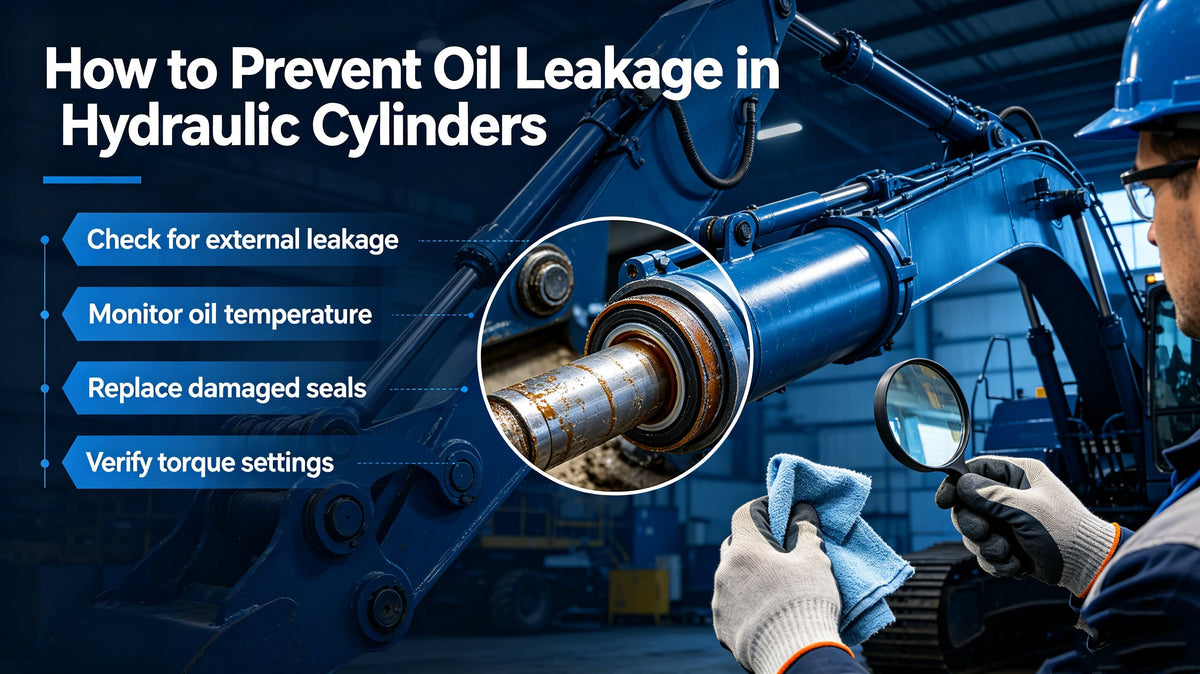

Short answer: Extend hydraulic cylinder seal life by controlling contamination, protecting the rod, maintaining correct alignment, avoiding excessive heat and pressure, inspecting wipers and leaks early, and repairing worn hardware before installing a new kit.
This article focuses on preventive maintenance. For diagnosis after a seal has already failed, see seven common causes of seal failure.
Preventive Maintenance Schedule
| Interval | Checks | Action |
|---|---|---|
| Before operation | Rod cleanliness, visible leaks, damaged wiper, loose pins | Clean, document and investigate abnormalities |
| During operation | Drift, unusual heat, chatter, slow movement or pressure spikes | Stop if continued use may damage the cylinder |
| Scheduled service | Oil condition, filters, mountings, pins, bushings, rod and hoses | Service to machine-manufacturer limits |
| Before resealing | Bore, rod, gland, piston, grooves and clearances | Repair hardware and confirm the correct kit |
1. Keep Hydraulic Oil Clean
Particles can cut sealing lips and score sliding surfaces. Maintain filters, protect open lines during repairs and use clean filling and assembly equipment. A replacement kit installed into a contaminated system may fail again quickly.
2. Protect the Rod Surface
The rod passes through the wiper and rod seal on every cycle. Inspect it for impact marks, corrosion, chrome flaking and embedded dirt. Do not allow welding spatter, chains or tools to damage an exposed rod.
3. Maintain Wipers and External Protection
A worn or displaced wiper allows abrasive contamination into the gland. Inspect the wiper lip and the area around it. In severe mud, quarry or demolition service, inspection frequency may need to increase.
4. Correct Side Load and Misalignment
Worn pins, bushings or mountings can push the rod and piston sideways. Wear rings then carry excessive load, clearances increase and seals wear unevenly. Correct the mechanical cause rather than repeatedly replacing seals.
5. Control Temperature and Pressure
Excessive oil temperature can alter viscosity and accelerate material ageing. Pressure spikes and blocked return paths can overload sealing lips or cause extrusion. Investigate cooling, relief-valve and circuit problems according to the equipment service information.
6. Use the Correct Fluid and Material
NBR, HNBR, PU, PTFE and other materials have different temperature, friction and fluid-compatibility characteristics. Do not substitute a material solely because the dimensions match.
7. Record Failures and Repairs
Record operating hours, leak location, failed component, rod and bore condition, oil condition, kit reference and repair date. Repeated failures at the same position often indicate a hardware or system problem.
Warning Signs That Need Early Investigation
- A wet film becoming a recurring drip
- Cylinder drift under load
- Uneven wear on guide rings
- Scratches appearing on the rod
- Oil running unusually hot
- New vibration, chatter or stick-slip
Frequently Asked Questions
How often should cylinder seals be replaced?
There is no universal interval. Replace based on condition, leakage, performance, machine guidance and inspection findings.
Can preventive maintenance stop every seal failure?
No, but it can reduce failures caused by contamination, damaged hardware, misalignment, overheating and neglected wipers.
Should the cylinder be resealed if the rod is scratched?
The rod condition must be evaluated and repaired or replaced when outside acceptable limits. New seals running over damaged surfaces may fail prematurely.
For the next repair, review our identification guide and contact Fujis Seal if the application is unclear.