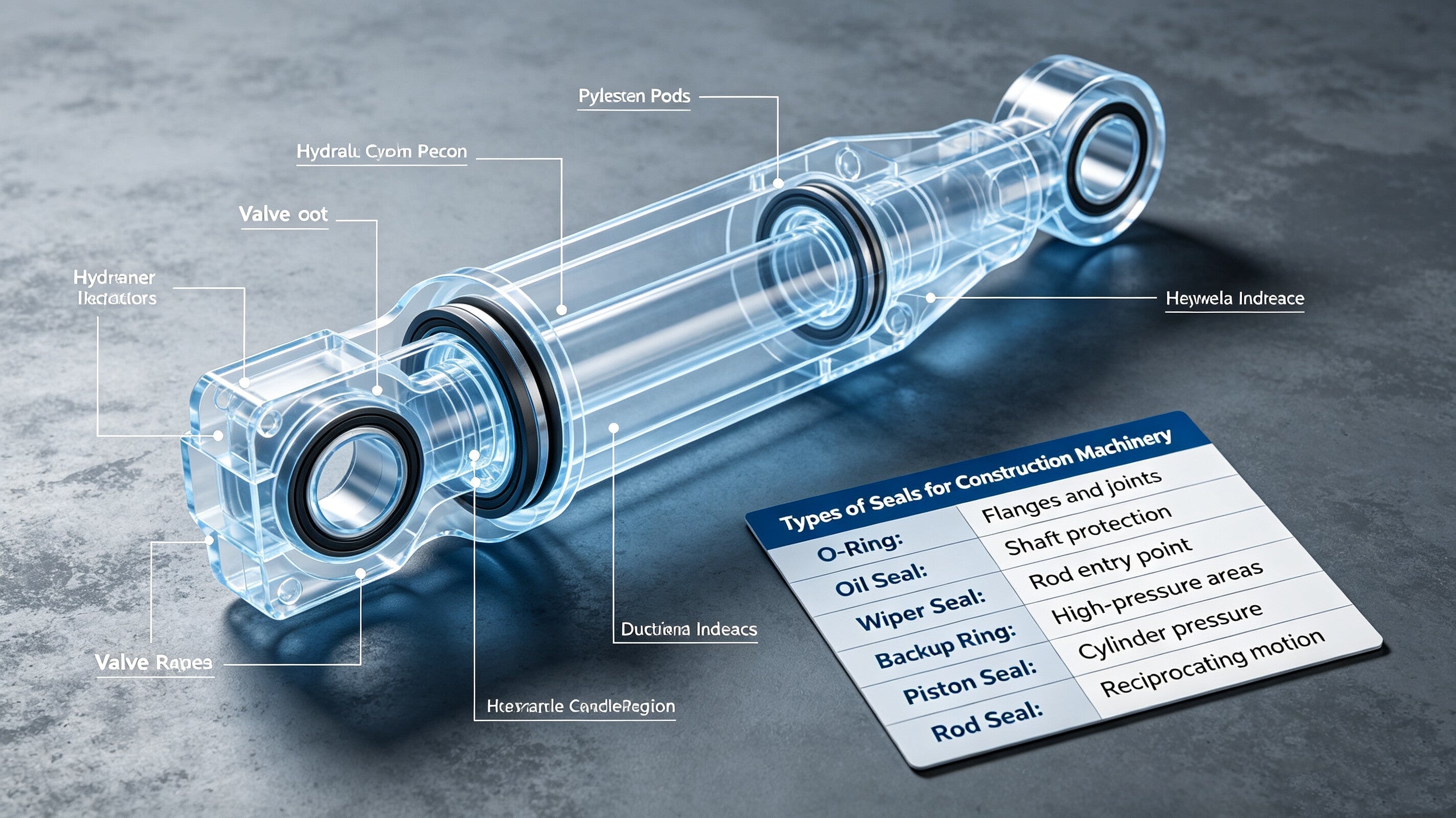

Short answer: Hydraulic seal quality cannot be confirmed from color, softness or appearance alone. Evaluate the correct profile and dimensions, material identification, sealing-edge condition, molding or machining defects, packaging, traceability and suitability for the actual pressure, fluid, temperature and hardware.
Pre-Installation Quality Inspection Checklist
| Inspection area | What to check | Reject or investigate when |
|---|---|---|
| Identification | Part number, application, material and quantity | Label is missing or conflicts with the order |
| Dimensions | ID, OD, width, profile and specified tolerance | Measurement is outside the applicable drawing or specification |
| Sealing edge | Continuous, clean and undamaged lip | Cuts, nicks, dents, flat spots or contamination are present |
| Surface | Uniform finish appropriate to the manufacturing process | Cracks, blisters, voids, embedded debris or severe flash are visible |
| Material | Compound or grade documented for the application | Material is unknown or incompatible with fluid and temperature |
| Packaging | Clean, sealed, labeled and distortion-free | Parts are mixed, compressed, dirty or exposed |
| Kit completeness | Count and profiles match the seal list | Components are missing or duplicated unexpectedly |
1. Confirm Application and Traceability
Start with the full part number, machine model, cylinder position and supplier identification. A well-made seal of the wrong profile or material is still an incorrect part. Keep package labels until installation and record the kit used for the repair.
2. Measure Against a Drawing or Specification
Use calibrated measuring equipment suitable for the component. Compare inside diameter, outside diameter, width and critical profile features with the applicable specification. Elastomer measurements can be affected by measuring force, temperature and distortion, so an informal ruler check is not a tolerance inspection.
3. Inspect Sealing Lips and Surfaces
Examine parts under good lighting. Critical edges should be continuous and free from cuts, cracks, deep scratches, embedded particles and handling damage. Minor manufacturing witness marks must be evaluated against the supplier's acceptance criteria rather than judged by appearance alone.
4. Verify Material Suitability
Color is not reliable proof of compound identity. NBR, HNBR, PU, PTFE and other materials can be formulated in multiple colors and grades. Confirm documentation and consider hydraulic fluid, operating temperature, pressure, speed, surface finish and environmental exposure.
5. Check Packaging and Storage Condition
Packaging should protect seals from dust, UV light, ozone, chemicals and deformation. A correct label should identify the kit sufficiently to prevent mixing. Inspect old stock for cracking, hardening, softening, tackiness, swelling and permanent set. See our seal-kit storage guide.
6. Inspect the Cylinder Hardware
Seal performance also depends on rod and bore finish, groove geometry, extrusion clearance, alignment and guide condition. Do not blame or approve a seal without inspecting the mating hardware.
Claims That Do Not Prove Quality
- “OEM quality” without a defined specification or evidence
- A specific color or glossy appearance
- Hardness judged by hand
- A product photo that resembles the old seal
- Price alone
- A machine model without part-number or cylinder confirmation
Questions to Ask a Seal-Kit Supplier
- What exact application and part number does the kit reference?
- What materials are used in the main sealing components?
- Can the supplier confirm dimensions or a seal list when required?
- How should the kit be stored and inspected?
- What evidence is needed for a fitment or quality claim?
- What are the return and after-sales conditions?
Frequently Asked Questions
Can seal quality be identified from hardness alone?
No. Hardness is only one material property and must be measured using an appropriate method. Profile, compound, dimensions and application conditions also matter.
Does a small amount of molding flash make a seal defective?
Not automatically. Location, size and the applicable acceptance criteria matter, especially near a functional sealing edge.
Should new seals be washed before installation?
Keep them clean and follow the supplier's instructions. If cleaning is required, use a method compatible with the material; avoid unapproved solvents and sharp tools.
Before purchasing, use our identification guide and measurement guide, or contact Fujis Seal.
Technical note: Acceptance limits and tolerances must come from the applicable drawing, supplier specification or recognized inspection standard for the exact component.